
How Do Fall Colors Happen? The Science Behind Tennessee’s Autumn Show

The Southern Tennessee Weather Blog is proudly presented by Heritage South Community Credit Union.
We Help When Others Won’t!
Visit https://www.heritagesouth.org/ today to see how HSCCU can help YOU!
We may still be dealing with temperatures in the 90s across Southern Middle Tennessee, but believe it or not, one of my favorite times of the year is getting closer. Over the next several weeks, the seemingly endless sea of green across Tennessee will gradually begin trading places with shades of yellow, orange, red and eventually brown. Of course, the leaves don't particularly care that it still feels like July outside. The process that eventually produces our fall colors is already being influenced by something that has been changing every single day since the beginning of summer: daylight.
So, what actually tells a tree that fall is approaching? Why do some leaves turn brilliant red while others become yellow or orange? How much does weather influence the quality of our fall colors? And perhaps most importantly, when can we typically expect peak color here in Southern Middle Tennessee? There's quite a bit more science behind our annual fall show than simply “it got cold outside.”
It All Starts With Sunlight and Chlorophyll
Throughout spring and summer, leaves essentially operate as tiny food factories. They take in sunlight and carbon dioxide while water is supplied through the tree's roots. Through photosynthesis, the plant converts that energy into sugars that help it grow and survive. The familiar green color of a healthy summer leaf comes primarily from chlorophyll, the pigment that absorbs light used during photosynthesis. There's so much chlorophyll present during the growing season that its green color overwhelms many of the other pigments within the leaf.
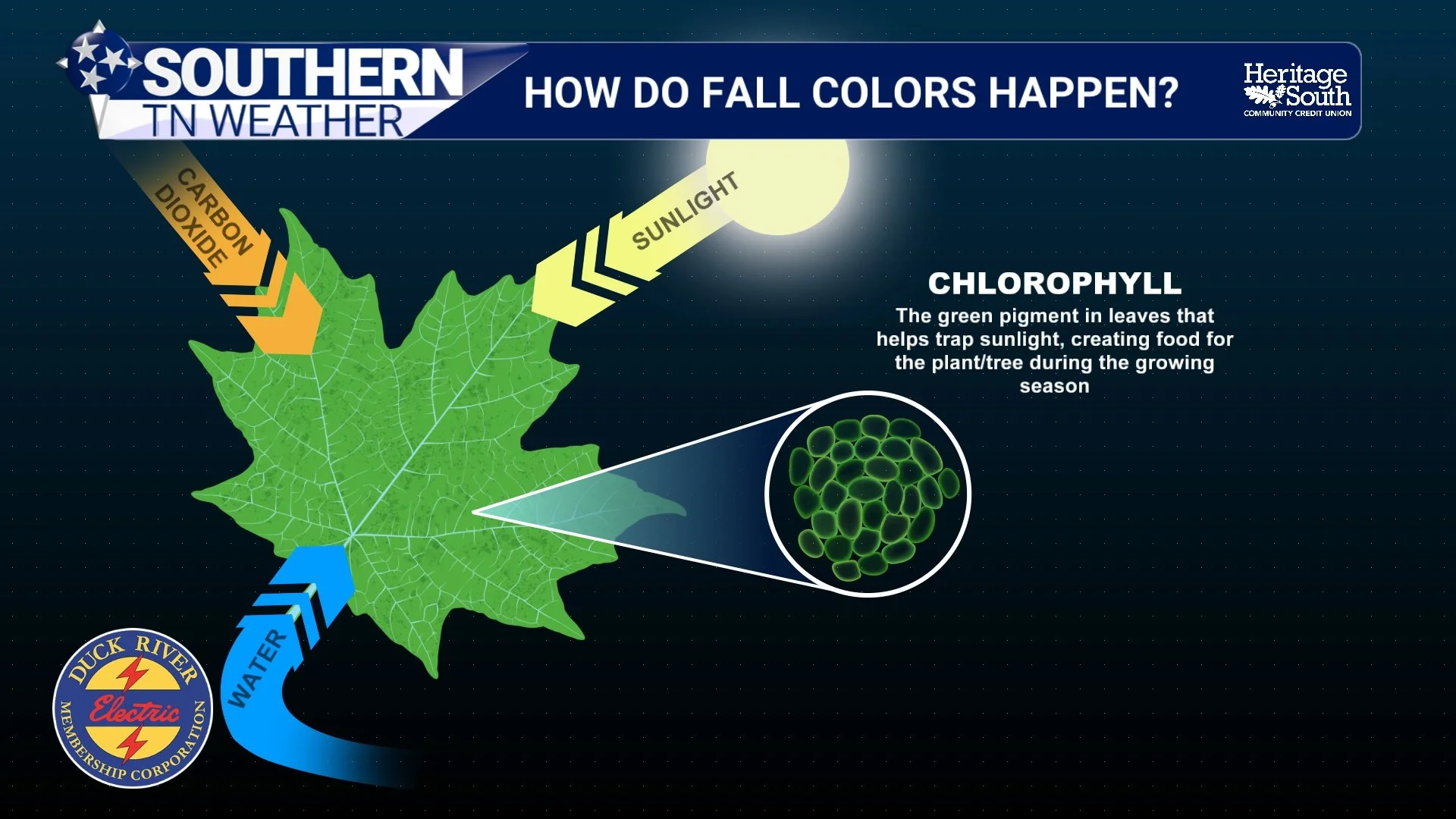
STNWX - HOW DO FALL COLORS HAPPEN
As summer begins transitioning toward fall, however, our days steadily become shorter and the Sun follows a lower path across the sky. That declining daylight is one of the most dependable seasonal signals a tree receives. Unlike an unusually hot September afternoon or an early cool morning, the length of daylight follows a predictable annual cycle. As the amount and intensity of sunlight decrease, trees begin preparing themselves for winter. Chlorophyll production slows and eventually stops, and the chlorophyll already inside the leaves begins breaking down. And that's when the magic starts becoming visible.
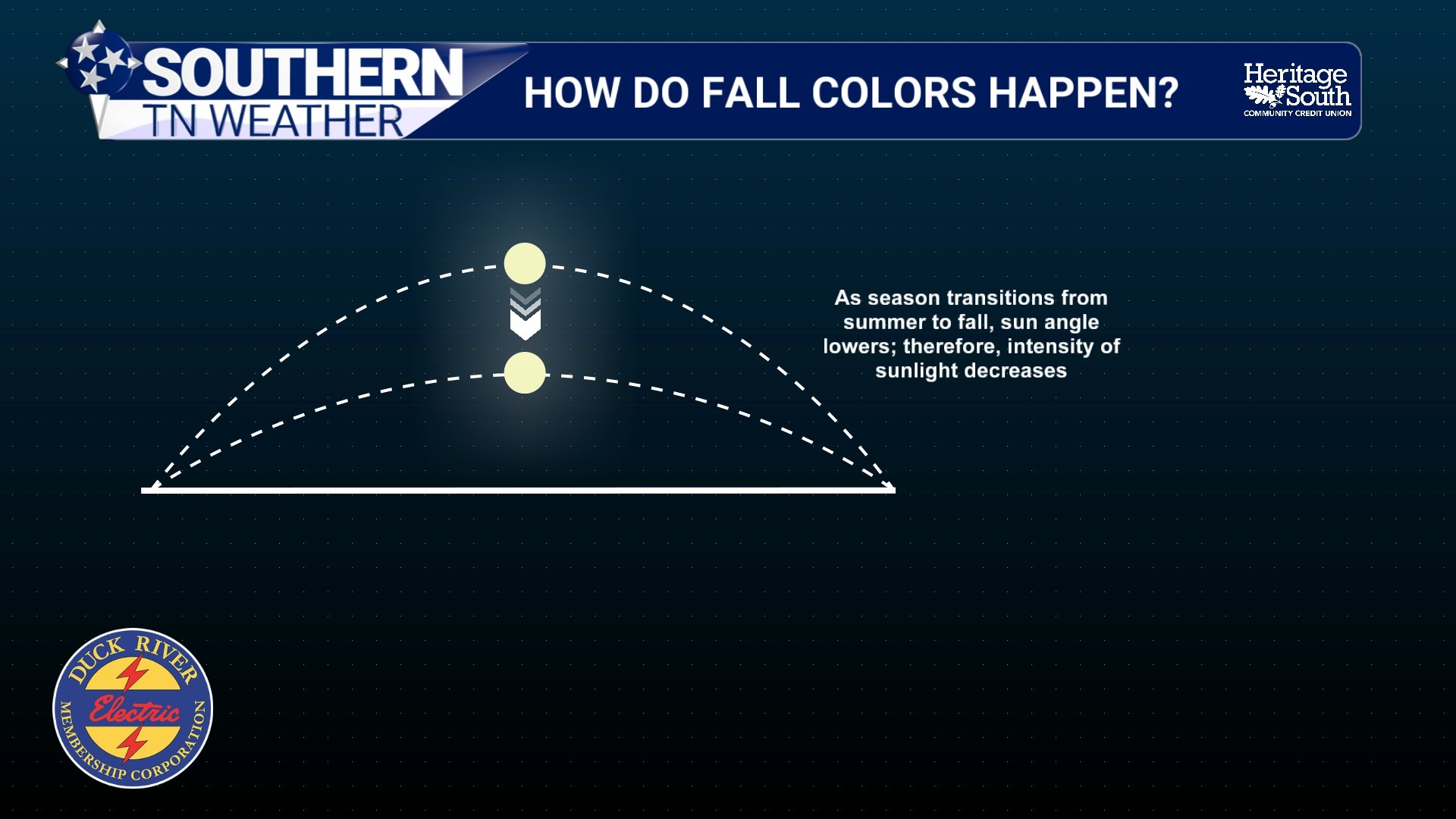
STNWX - HOW DO FALL COLORS HAPPEN
The Colors Were Hiding There All Along
One of the coolest things about fall foliage is that some of those beautiful colors aren't suddenly created when October arrives. They've essentially been hiding behind the green chlorophyll. As chlorophyll disappears, pigments called carotenoids become much easier to see. These pigments produce many of the yellow and orange colors we associate with autumn and are present in leaves throughout much of the growing season.
Reds and purples are a little different. Pigments called anthocyanins can be produced in greater amounts during the fall as sugars become trapped within leaves. As the tree prepares to shed a leaf, a layer of cells gradually develops near the base of the leaf stem, reducing the movement of water and nutrients between the leaf and the rest of the tree.
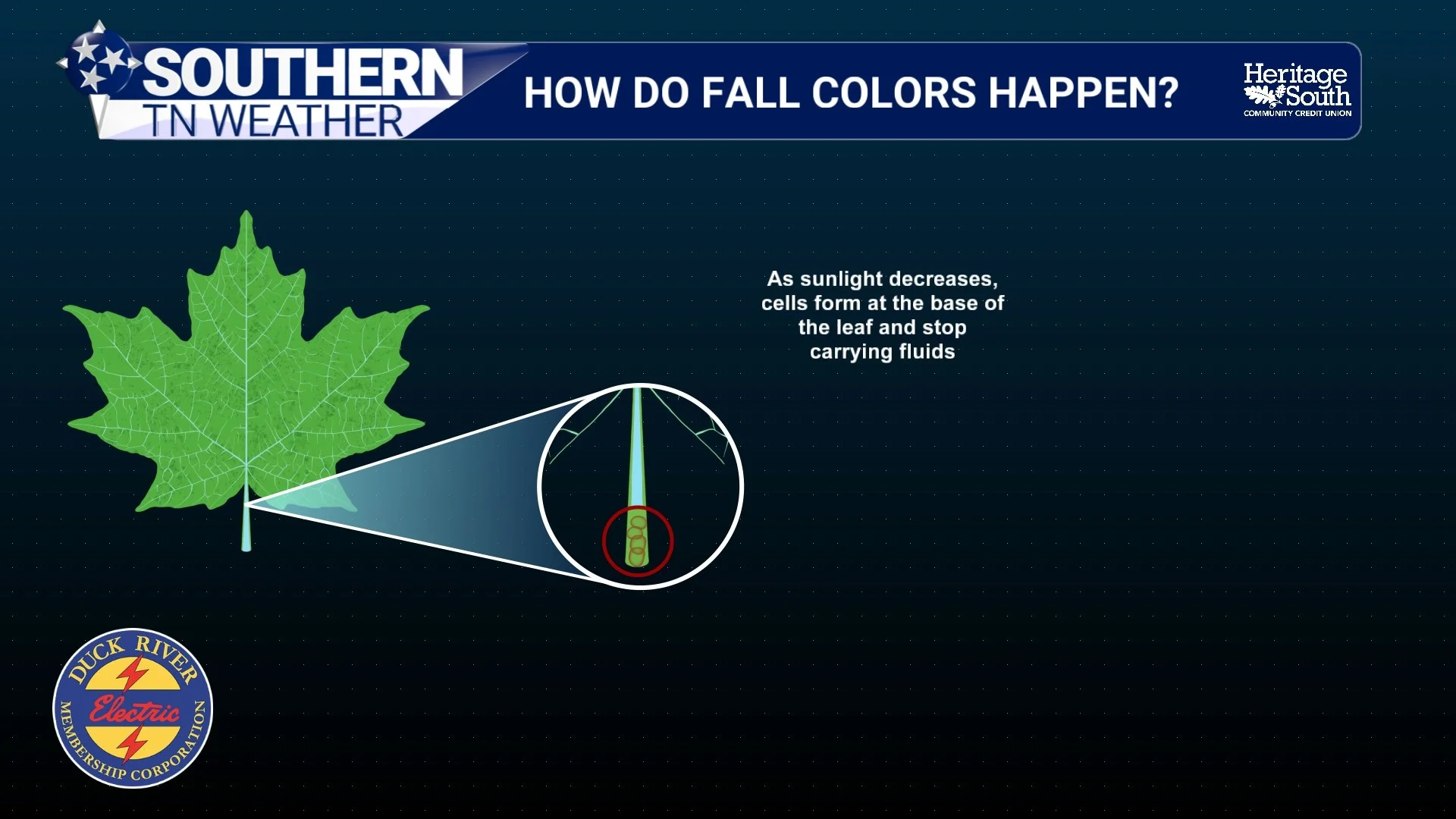
STNWX - HOW DO FALL COLORS HAPPEN
As that connection becomes increasingly restricted, sugars can accumulate inside the leaf. Under the right conditions, that can encourage anthocyanin production and help create some of those spectacular reds and purples. Eventually, the connection weakens enough that the leaf separates from the tree and falls to the ground.
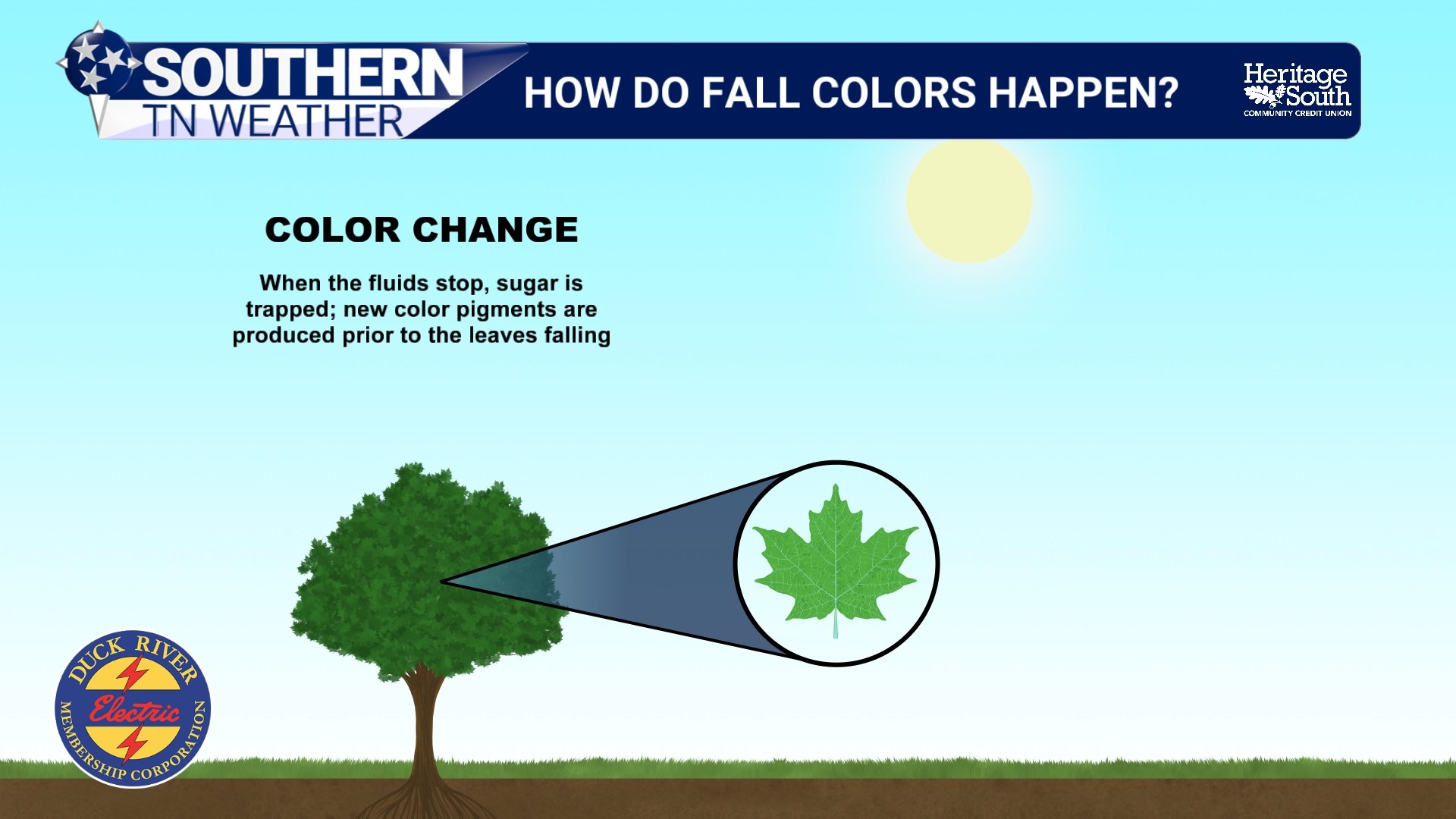
STNWX - HOW DO FALL COLORS HAPPEN
So when you're looking across a Tennessee hillside covered in yellow, orange and red, you're essentially seeing the chemistry of the leaves change as the trees shut down their summer operations and prepare for winter.
Weather Still Has a BIG Say in How Good the Colors Look
Day length helps control the timing of the seasonal transition, but weather can have a major influence on the quality and duration of fall color. One of the better combinations for vibrant fall foliage is generally a stretch of sunny autumn days paired with cool, but not freezing, nights. Sunshine can promote sugar production while cooler nights slow the movement of those sugars out of the leaves, helping favor brilliant red and purple pigments in some species. Moisture matters, too, and not just during October. Conditions during the growing season can influence tree health well before the leaves begin changing. Significant drought can stress trees and sometimes cause leaves to brown or drop prematurely. On the other hand, prolonged cloudy or excessively wet weather during the color-changing period can sometimes result in a less impressive display.
Then there's wind. You can have beautiful color developing across the region, only for a strong storm system with heavy rain and gusty winds to come along and strip a lot of those leaves from the trees. An early hard freeze can also damage leaves and shorten the show. That's why predicting the exact quality of fall foliage months in advance is difficult. We have a pretty good idea of when colors typically peak, but the weather leading up to that point helps determine whether we get a spectacular season or a more muted one.
So, When Do Fall Colors Typically Peak Around Here?
If you're already ready to go leaf peeping, we've still got a little while. Historical averages from 1991-2020 show the progression of peak fall color gradually moving southward and into lower elevations as autumn progresses. Higher elevations and locations farther north generally peak first, while lower elevations and locations farther south take longer.
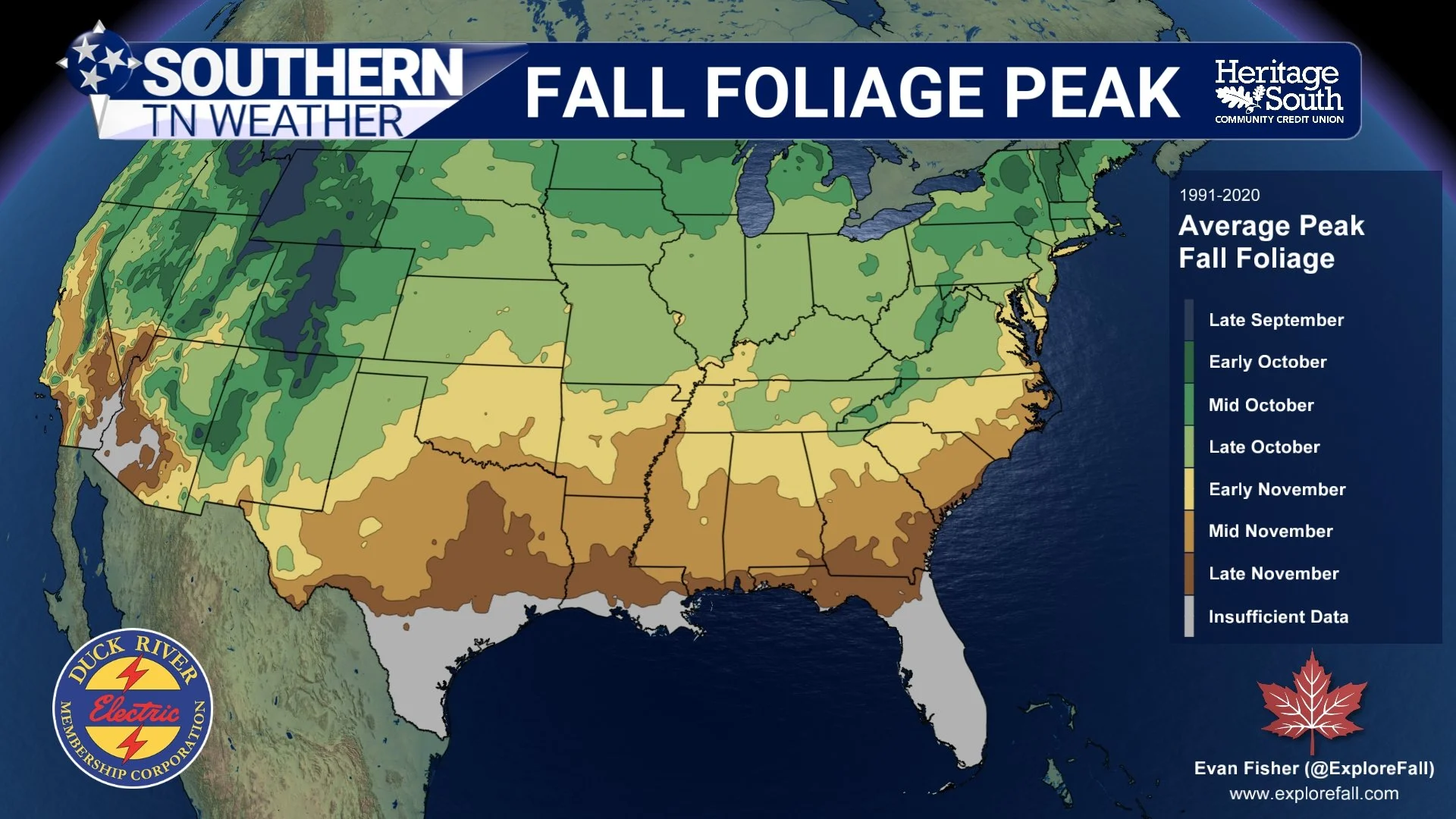
FALL FOLIAGE PEAK
For much of Tennessee, peak foliage generally occurs from the latter half of October into early November, with elevation creating some important local differences. The higher elevations of East Tennessee and the Cumberland Plateau tend to get going earlier, while much of Middle Tennessee typically has to wait until later October or around the beginning of November for the best overall color. Here in Southern Middle Tennessee, late October into early November is generally the period to watch for peak color, although there can be quite a bit of variation from one year to another and even from one hillside to the next.
And remember, “peak” doesn't mean that's the only week worth looking at the leaves. Color gradually develops beforehand and lingers afterward. Some individual species change earlier than others, so the transition unfolds over several weeks rather than everybody flipping from green to orange on the same Tuesday afternoon.
Unfortunately, It Still Feels NOTHING Like Fall
Now for the part where I ruin everybody's fall mood. 😂 Our actual forecast still looks much more like summer than autumn. High pressure remains firmly established across the Southeast, keeping Southern Middle Tennessee quite warm through Wednesday. Highs this afternoon will generally reach the lower 90s, with feels-like temperatures approaching 100° in some locations. A few isolated showers have managed to develop this afternoon, particularly around the I-65 corridor, but widespread rain isn't expected.
Wednesday currently looks like the hottest day of the week. Highs climb into the lower and middle 90s, and portions of Middle Tennessee could experience Heat Index values near 105°. A Heat Advisory has been issued for portions of northwest Middle Tennessee Wednesday, while farther south across our area, Heat Index values should generally remain below 100°. Our weather pattern finally begins changing Thursday as high pressure weakens and a front approaches the region. Shower and thunderstorm chances increase during the afternoon and become considerably more widespread Thursday evening into Friday, particularly across Middle Tennessee. The severe-weather threat currently appears low, although the strongest storms could produce gusty winds, frequent lightning and locally heavy rainfall.
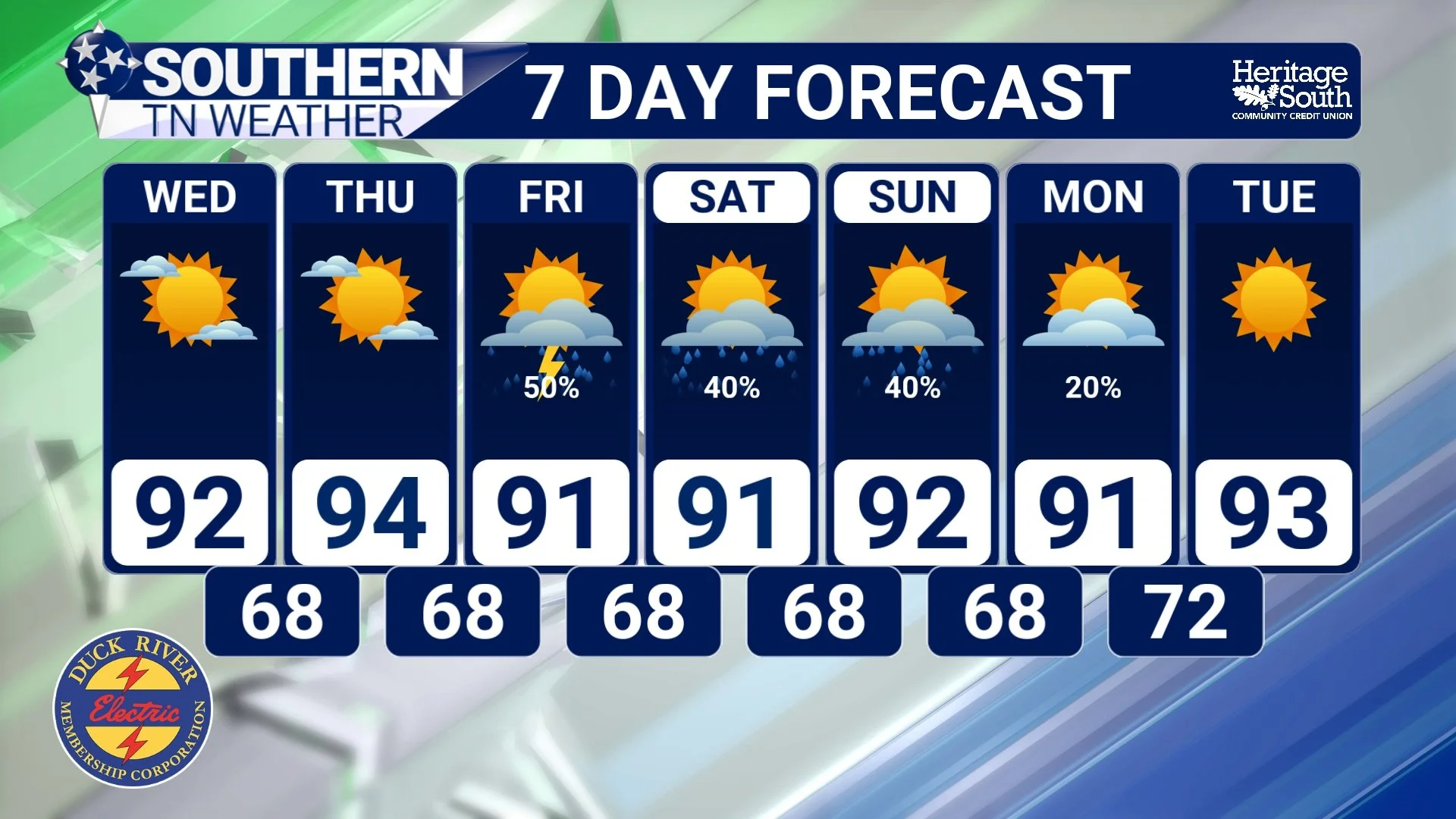
STNWX 7-DAY FORECAST
Scattered shower and thunderstorm chances linger Friday and into the weekend as several weaker disturbances move through the region. Unfortunately, don't expect the rain to suddenly usher in fall. Temperatures remain quite warm, with highs generally in the lower 90s and potentially climbing back toward the middle 90s by the latter part of the weekend and early next week. So while the trees are already paying attention to our shortening days, the thermometer apparently hasn't gotten the fall memo just yet.
The Bottom Line 🧾
🍁 Shortening daylight is one of the primary signals that tells deciduous trees it's time to begin preparing for winter.
🌿 Chlorophyll gives leaves their green appearance during the growing season and begins breaking down as fall approaches.
🟡 Yellow and orange pigments were largely there all along, but become visible as green chlorophyll disappears.
🔴 Sugars trapped within some leaves can help produce the brilliant reds and purples associated with anthocyanins.
☀️ Sunny days and cool, non-freezing nights can favor beautiful fall color.
🌧️ Drought, excessive moisture, early freezes and strong winds can all influence the quality or duration of foliage.
🍂 Southern Middle Tennessee typically watches for its best overall fall color around late October into early November, with higher elevations generally changing sooner.
🌡️ Unfortunately, there's no fall weather in sight just yet. Highs remain in the 90s through much of the next seven days.
⛈️ Rain and thunderstorm chances increase Thursday into Friday and continue periodically into the weekend.
📰 Reminder: The Southern Tennessee Weather Blog, presented by Heritage South Community Credit Union, is updated Monday through Friday with fresh, locally tailored forecasts you can trust.
