
Weather Lesson Tuesday: What Actually Causes Fog?

The Southern Tennessee Weather Blog is proudly presented by Heritage South Community Credit Union.
We Help When Others Won’t!
Visit https://www.heritagesouth.org/ today to see how HSCCU can help YOU!
When the weather pattern quiets down, it gives us a perfect chance to talk about something we’ve been seeing a lot of lately in Southern Middle Tennessee — fog. It’s been showing up in valleys, along the Plateau, and even during broad daylight on some mornings.
Today’s weather lesson uses four graphics to walk you through how fog forms, why it’s so common this time of year, and what makes freezing fog different.
What Is Fog?
Fog is simply a cloud that forms at ground level. It builds when the air becomes completely saturated (meaning the temperature and dew point come together) and water vapor condenses into tiny droplets floating in the air.
But what causes that saturation to happen? That’s where today’s graphics come in.
The Setup: How Fog Begins
Fog needs three main ingredients:
Moisture near the ground
Cooling temperatures
Little to no wind
On calm, clear nights, the ground loses heat quickly. As it cools, the air touching it cools too. If the air cools all the way to the dew point — bingo, fog begins forming.
This is what we call radiation fog, and it’s the most common type we see around Southern Tennessee.
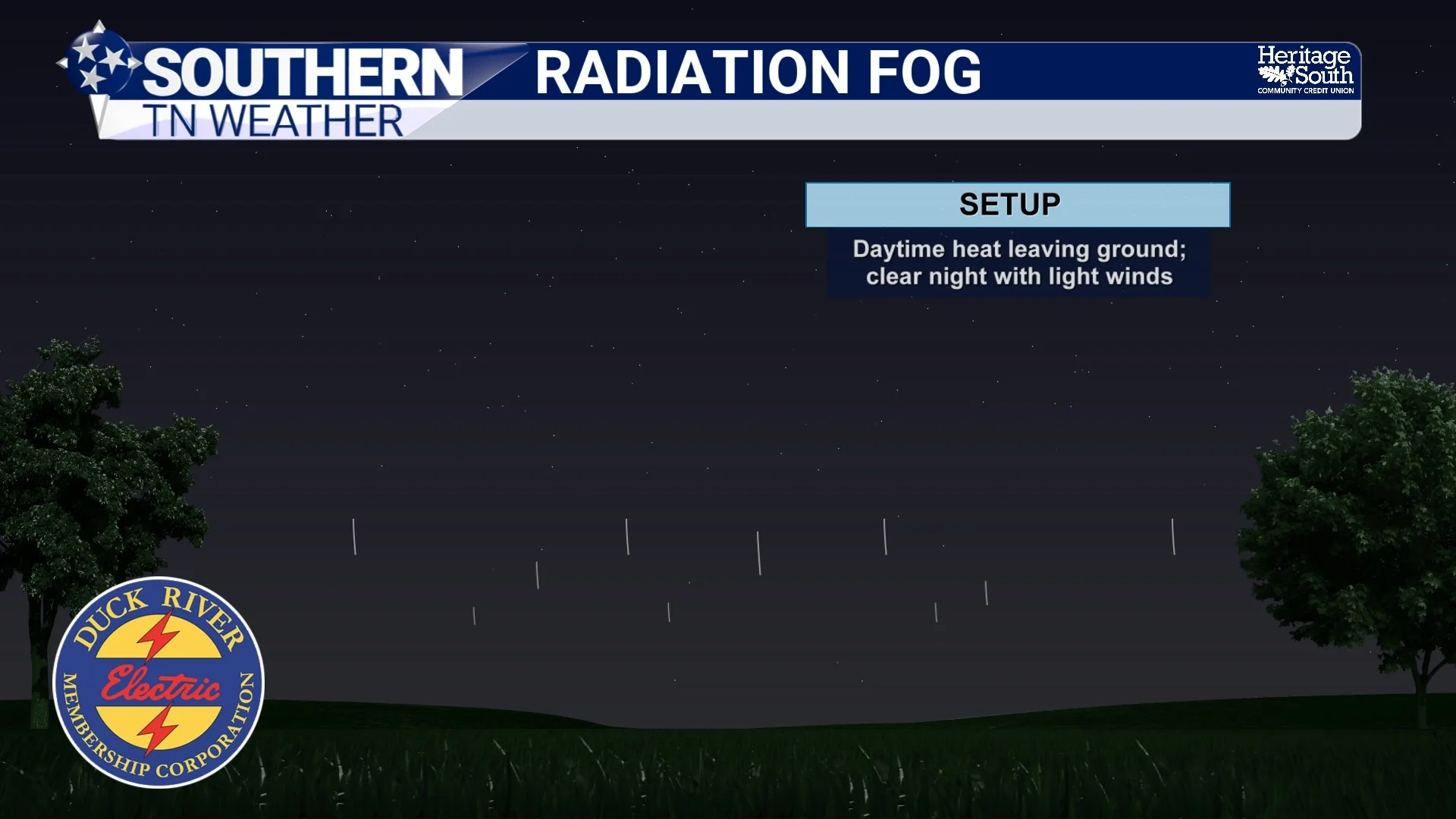
Setup - Radiation Fog
The Moisture Layer
The image below shows one of the biggest keys to fog formation:
a thin moist layer right near the surface, sitting underneath drier air aloft.
When the surface cools:
Moist air near the ground reaches saturation
Rising air quickly passes through the moist layer
Fog forms easily and settles into hollows and valleys
This is why places like Lynchburg, Tims Ford, Normandy, and Huntland SOMETIMES see fog more often than spots on higher hills — moisture pools low to the ground.
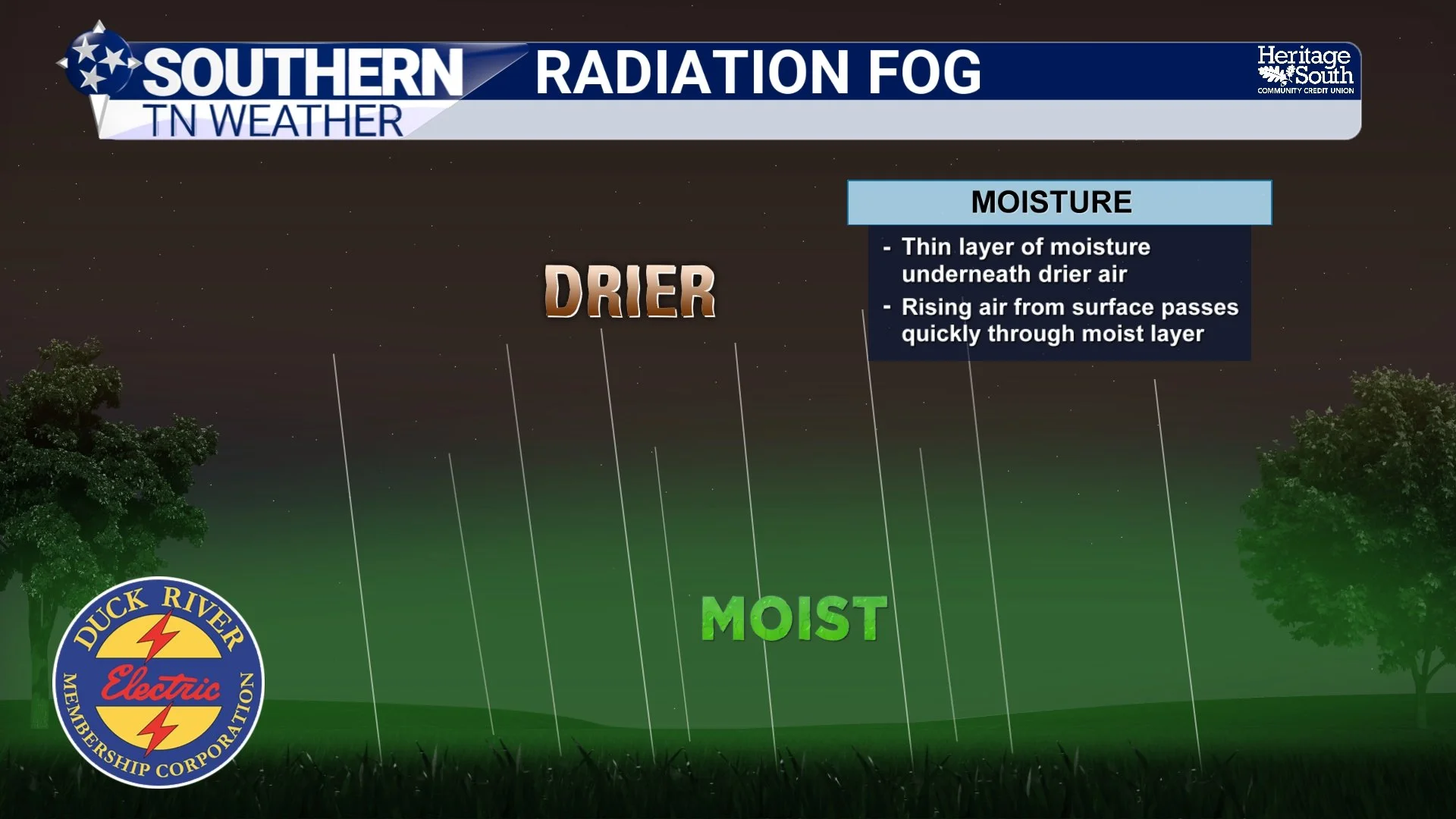
Moisture - Radiation Fog
Cooling and the Temperature Gradient
The graphic below highlights how fog strengthens when the lower atmosphere cools faster than the air above it. The moist layer near the surface doesn’t hold heat very well, so it cools quickly overnight. That rapid cooling leads straight to condensation… which leads straight to fog.
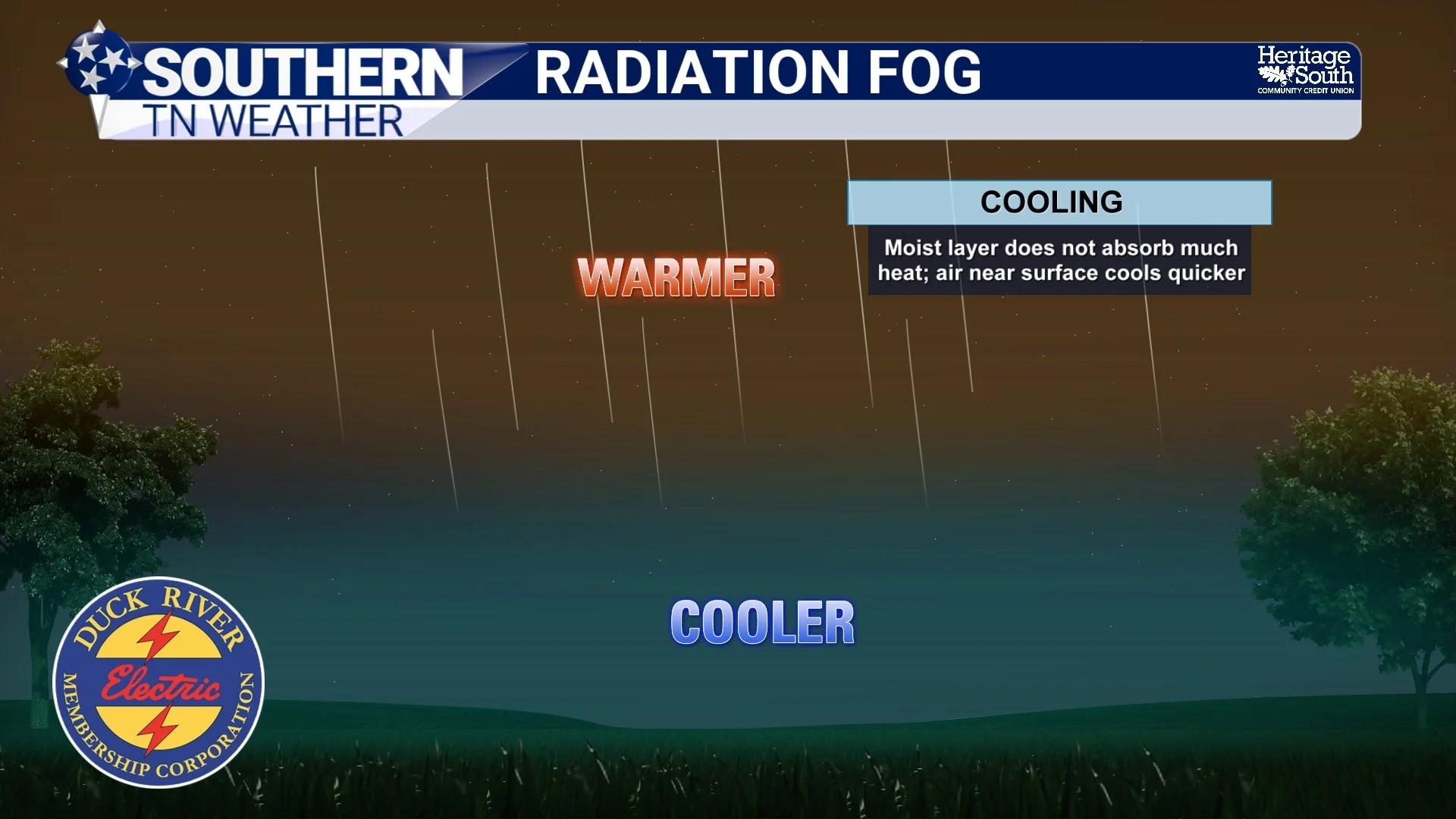
Cooling - Radiation Fog
Why the Plateau Gets Fog So Often
We joke about it, but the Cumberland Plateau really does live in its own fog world.
Here’s why:
Many cloud decks sit right at Plateau elevation
When clouds brush the ground, you get “in-the-cloud” fog
Air flows upward along the Plateau’s edge, which cools and condenses moisture
Colder nighttime temperatures accelerate fog development
This is why TDOT cameras on Monteagle often show visibility near zero when everyone else is clear, especially this time of year.
Fog Across America: We’re in a Fog Hotspot
This national map shows annual fog frequency — and look at the bulls-eye centered on Tennessee, Kentucky, and the Ohio Valley.
We regularly see 20–40 foggy days per year, thanks to:
Humid air sources
Valleys and varied elevation
Frequent cold fronts
Long, cool fall/winter nights
Late fall through early winter is peak fog season for us.
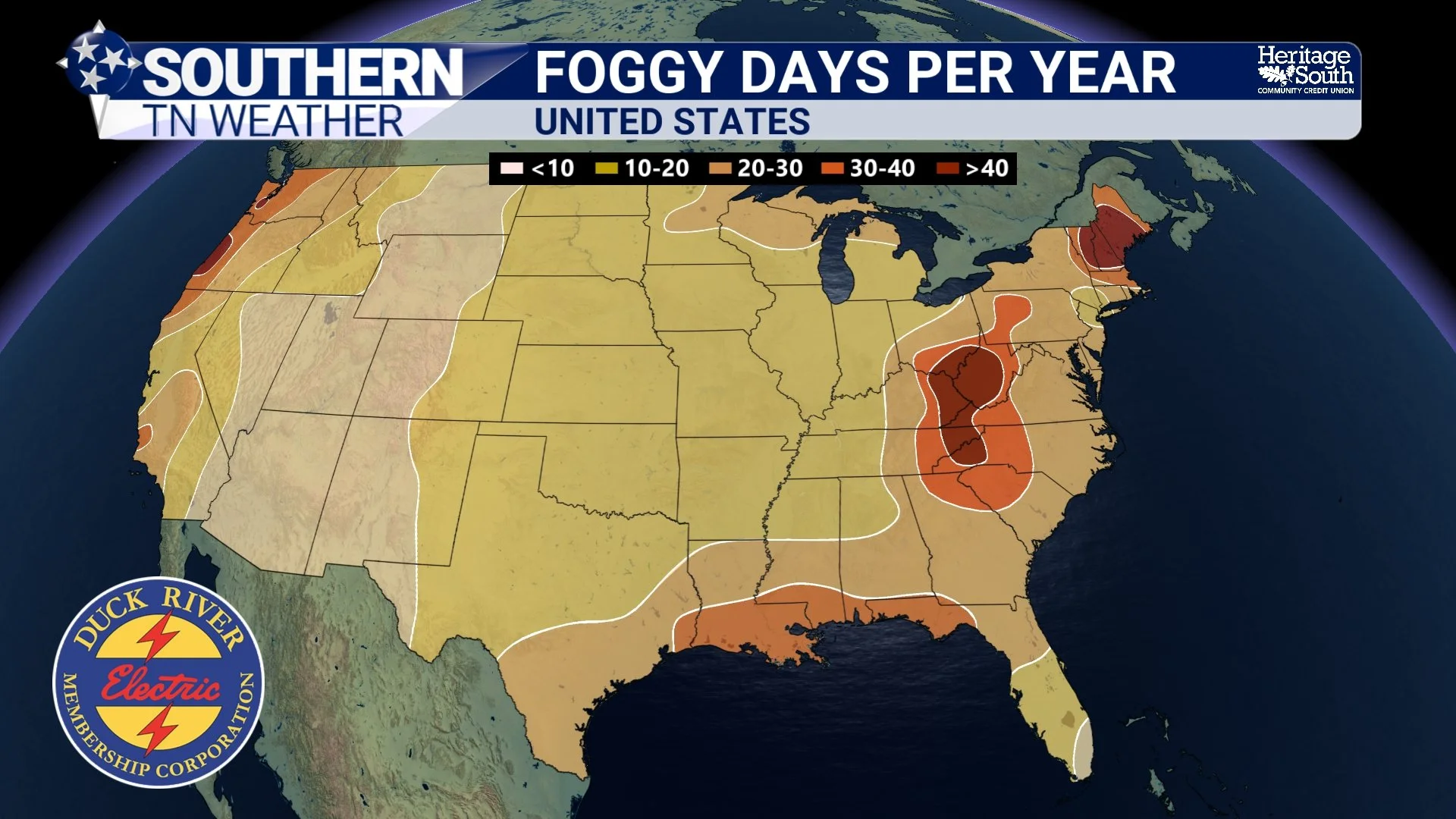
Foggy Days per Year - US
What About Freezing Fog?
Freezing fog forms when:
Air temperatures are at or below 32°
Fog droplets make contact with cold objects
They instantly freeze into a thin glaze
This is very different from sleet or freezing rain… The droplets are tiny and suspended until they hit a surface.
Typical impacts include:
Light icing on bridges and overpasses
Ice forming on trees, fences, handrails, and power lines
Very localized slick spots
We’ve already had a few freezing-fog mornings this season, especially on the Plateau and in low-lying valleys.
The Bottom Line
• Fog is simply a cloud at ground level
• It forms when the temperature meets the dew point under light winds
• Radiation fog is our most common type across Southern Tennessee
• The Plateau sees more fog because cloud decks often sit at its elevation
• Freezing fog can create patchy icing, especially on bridges
• Late fall and early winter provide the perfect setup for frequent fog
📰 Reminder: The Southern Tennessee Weather Blog (Presented by Heritage South Community Credit Union) is updated Monday through Friday with fresh, locally tailored forecasts you can trust.
