
The Fall Equinox Is Here: But What Is It?

The Southern Tennessee Weather Blog is proudly presented by Heritage South Community Credit Union.
We Help When Others Won’t!
Visit https://www.heritagesouth.org/ today to see how HSCCU can help YOU!
HAPPY FALL, Y'ALL! 🍂 Well... almost. Even though September 22 is the first day of astronomical fall this year, fall doesn't technically begin until 7:05 PM CDT tonight, when the autumnal equinox occurs. And for once, Mother Nature appears to have looked at the calendar.
After weeks of temperatures in the 90s, Heat Index values occasionally reaching 105–110°, and enough late-summer heat to make September feel like July Part II, a legitimately cooler air mass is finally settling into Southern Middle Tennessee. Highs will fall into the 80s for the remainder of the week, with some 70s possible in our higher elevations and overnight temperatures eventually dipping into the 50s. Pretty good timing, huh?
But what actually happens at 7:05 tonight? Does Earth suddenly cross some magical line in space? Are we really going to have exactly 12 hours of daylight and 12 hours of darkness today? And does the beginning of astronomical fall have anything whatsoever to do with our cooler temperatures arriving at almost exactly the same time? Let's talk about it.
So... What Exactly Is the Fall Equinox?
First, the equinox is not an entire day. It's actually a specific moment in time. At 7:05 PM CDT tonight, the Sun will cross the celestial equator moving from north to south. The celestial equator is essentially Earth's equator projected outward into the sky. That moment marks the September equinox and the official beginning of astronomical fall in the Northern Hemisphere. South of the equator, the exact same moment marks the beginning of astronomical spring. To understand why this happens, we need to talk about Earth's tilt.
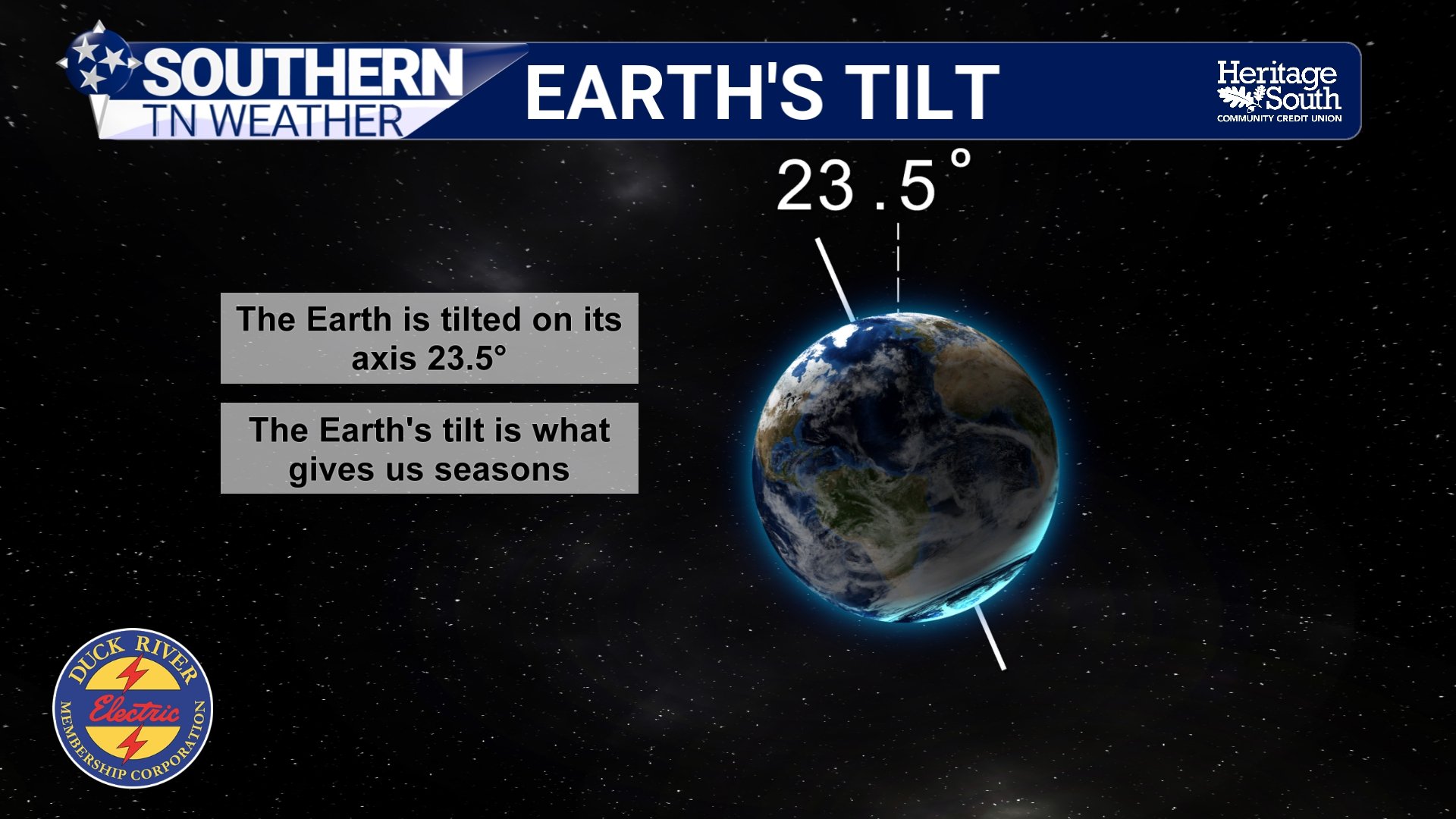
Earth's axis is tilted by about 23.5 degrees relative to its orbit around the Sun. That tilt, not Earth's distance from the Sun, is the primary reason we have seasons. During our summer, the Northern Hemisphere is tilted toward the Sun. The Sun takes a higher path through our sky, its rays strike the ground more directly, and we have longer days. All of that allows our part of the planet to receive considerably more solar energy. As Earth continues along its orbit, the Northern Hemisphere gradually becomes less tilted toward the Sun. The Sun appears lower in our sky, its rays become less direct, and our days become shorter.
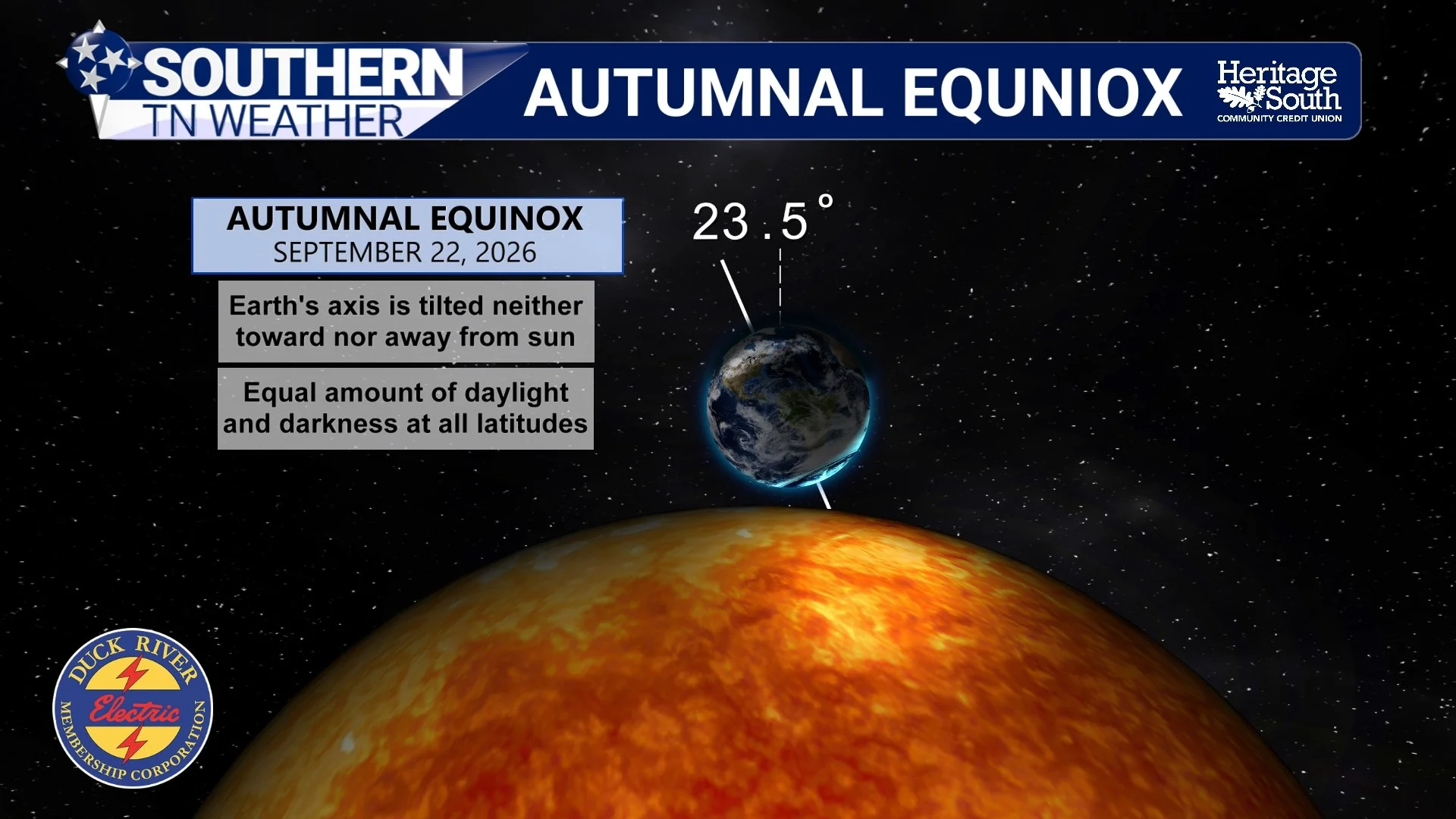
At the September equinox, Earth's axis is tilted neither toward nor away from the Sun. The Sun is directly overhead at the equator, and both hemispheres receive nearly equal amounts of daylight. After tonight, we continue to the other side of that balance. The Northern Hemisphere becomes increasingly tilted away from the Sun until we reach the winter solstice in December. That's why our days will continue getting shorter for the next three months. Think of today as the halfway point in our annual journey from the long days of summer toward the short days of winter.
But Do We REALLY Get Exactly 12 Hours of Daylight?
This is probably the biggest misconception surrounding the equinox. The word equinox comes from Latin words meaning roughly “equal night,” so it would make sense to assume today consists of exactly 12 hours of daylight and 12 hours of darkness. But it doesn't. It's very close, but there are a couple of quirks that give us slightly more than 12 hours of daylight on the equinox.
One reason is surprisingly simple: the Sun isn't a tiny point in the sky. When we calculate sunrise, we don't wait until the center of the Sun crosses the horizon. Sunrise occurs when the upper edge of the Sun first becomes visible. Likewise, sunset isn't until the upper edge of the Sun finally disappears. That adds a little daylight to both ends of the day. Our atmosphere cheats a little bit, too.
Earth's atmosphere bends sunlight through a process called refraction. Near the horizon, that bending allows us to see the Sun even when its actual geometric position is slightly below the horizon. In other words, the atmosphere lets us see the Sun a little bit before it has geometrically risen and a little bit after it has geometrically set. Put those effects together, and the equinox doesn't quite give us a perfect 12-hour split.
There is actually another term for the date when daylight and nighttime are closest to equal: the equilux. The exact date varies depending on latitude and location, and in the Northern Hemisphere it generally occurs a few days after the September equinox. So, “equal night” is pretty darn close. Just not quite as mathematically perfect as the name makes it sound.
Why Are We Losing Daylight So Quickly Right Now?
You've probably noticed this one without looking at any charts. It wasn't very long ago that we still had plenty of daylight well into the evening. Now it feels like somebody is reaching over and turning the lights off earlier every week. That's not your imagination. The rate at which our daylight changes isn't constant throughout the year. Around the solstices in June and December, the change is relatively slow. That's actually where the word “solstice” comes from, referring to the Sun appearing to “stand still.”
Around the equinoxes, however, the Sun's apparent position is changing more rapidly from one day to the next. That means we're currently in one of the fastest periods of daylight loss of the entire year. After today's equinox, nights become longer than days in the Northern Hemisphere, and we'll continue losing daylight until the winter solstice in December. Then the process reverses, and our days slowly begin growing longer again. This changing sunlight is also part of why our temperatures eventually cool during autumn, but there's an important word in that sentence: Eventually.
The equinox does NOT flip a switch in the atmosphere. Our land, atmosphere and especially the oceans retain enormous amounts of heat accumulated during summer. That's one reason our temperatures can remain quite warm well after the amount of incoming solar energy has begun decreasing. It's called seasonal lag, and it's why the hottest weather of summer usually occurs weeks after the summer solstice and why September can still produce temperatures that would make July proud. If you endured last week's heat, I probably don't need to convince you of that one. 😂
Mother Nature Actually Checked the Calendar This Year
Here's the funny part. The cooler weather arriving in Southern Middle Tennessee this week has essentially nothing to do with the equinox happening tonight. It's just really good timing. Our recent cold front and changing weather pattern are responsible for replacing the extremely hot air we've been dealing with. The equinox is an astronomical event determined by Earth's position in its orbit. The two just happened to line up beautifully this year.
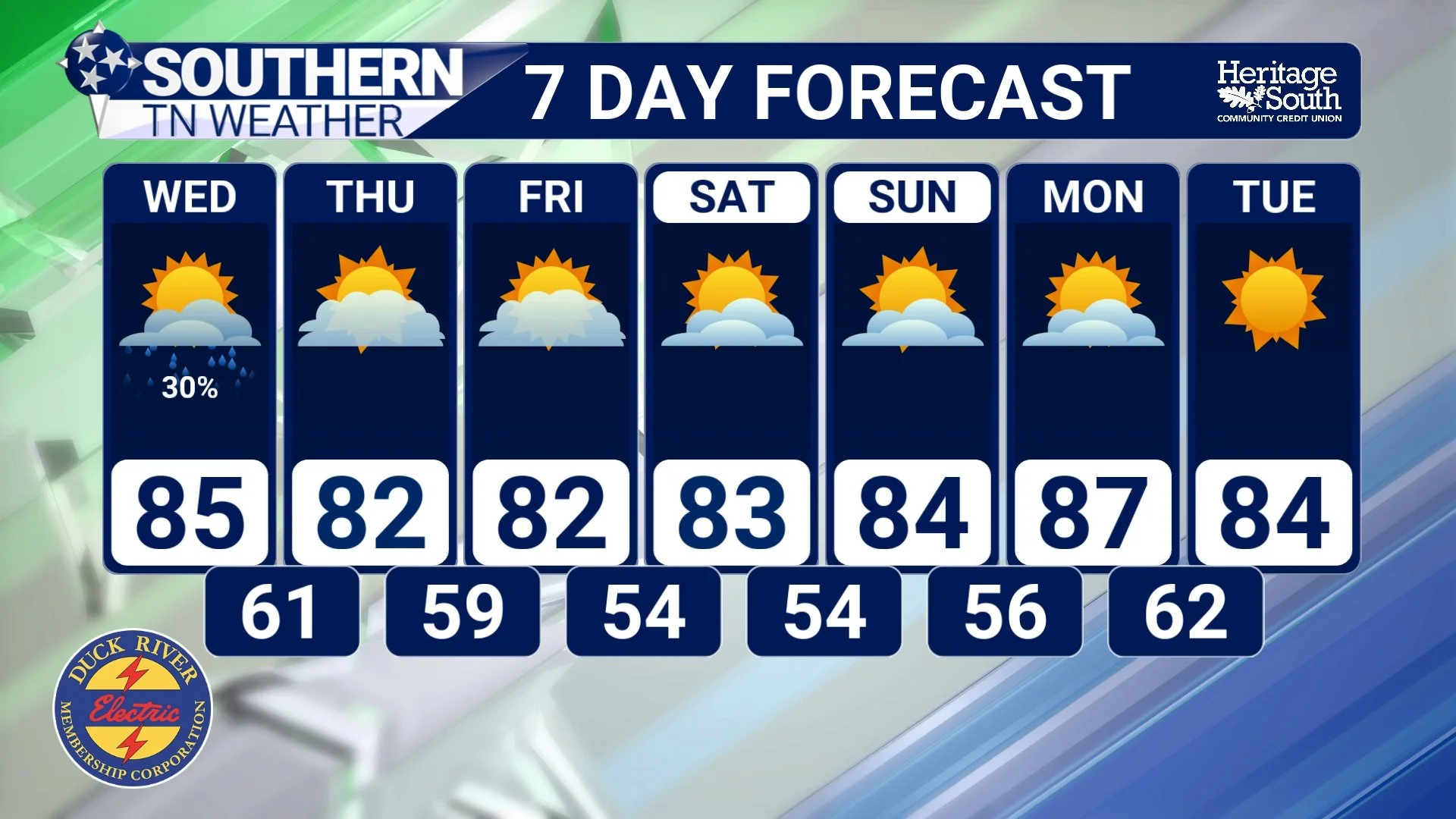
For the remainder of today, scattered showers and thunderstorms will continue moving across portions of Southern Middle Tennessee. A few storms could produce gusty winds around 40–50 MPH, small hail, frequent lightning and heavy rainfall. The overall severe-weather threat remains low, and storm coverage should gradually decrease this evening. Our frontal boundary will hang around the region for a little while longer, which means a few showers and thunderstorms remain possible Wednesday, especially across eastern portions of Southern Middle Tennessee and toward the Cumberland Plateau. Severe weather is not expected. Then the cooler and drier air really starts winning the battle. By Thursday, most of the area should be dry with highs generally in the lower to middle 80s, although some of our higher elevations could struggle to get out of the upper 70s.
And the mornings? Now we're talking. Overnight lows should fall into the 50s by Friday and this weekend, with some upper 40s even possible across portions of the Cumberland Plateau. After the ridiculous heat we've experienced lately, walking outside to temperatures in the 50s may require a ceremonial opening of every window in Southern Middle Tennessee. 😂
Dry weather should dominate Friday through the weekend with highs mainly in the lower to middle 80s. Temperatures may begin creeping upward again early next week, potentially returning to the upper 80s in some areas, so we're not necessarily finished with warmer-than-normal weather just yet. But for now? Astronomical fall arrives at 7:05 tonight, and the atmosphere has apparently decided to play along. I'll take it!
The Bottom Line 🧾
🍂 The autumnal equinox occurs at 7:05 PM CDT today, officially beginning astronomical fall in the Northern Hemisphere.
🌎 The equinox occurs when the Sun crosses the celestial equator from north to south.
☀️ Earth's 23.5° axial tilt is responsible for our seasons, not our distance from the Sun.
⚖️ Despite the name “equinox,” today does not feature exactly 12 hours of daylight and 12 hours of darkness.
🌅 The size of the Sun's disk and atmospheric refraction give us slightly more than 12 hours of daylight around the equinox.
📉 We're currently losing daylight quickly, and nights will become longer than days as we continue toward the winter solstice.
🌡️ The equinox does not directly cause cooler weather. Our conveniently timed cooldown is the result of a changing weather pattern and cooler air arriving behind our recent front.
⛈️ Scattered showers and storms remain possible today, with a few gusty storms possible.
🌦️ A few showers and storms may linger Wednesday, particularly farther east.
🍁 Highs settle into the lower to middle 80s later this week, with some upper 70s possible in the higher elevations.
🥶 Overnight lows drop into the 50s by Friday and this weekend, with some upper 40s possible on the Cumberland Plateau.
☀️ Mainly dry and VERY comfortable weather is expected Friday through the weekend.
📰 Reminder: The Southern Tennessee Weather Blog, presented by Heritage South Community Credit Union, is updated Monday through Friday with fresh, locally tailored forecasts you can trust.
