
Could Our Ongoing Drought RUIN This Year's Fall Colors? Here's What the Science Says!

The Southern Tennessee Weather Blog is proudly presented by Heritage South Community Credit Union.
We Help When Others Won’t!
Visit https://www.heritagesouth.org/ today to see how HSCCU can help YOU!
Well, y'all, we're getting into one of my FAVORITE times of the year across Southern Middle Tennessee! The mornings are crisp, the afternoons are comfortable, and before long, our trees will be putting on their annual display of beautiful reds, oranges, yellows, and golds. 🍂 But there's something I've been thinking about lately, especially considering the rather unusual weather we've experienced over the past several weeks. Could our ongoing drought have a negative impact on this year's fall foliage?
After all, we've experienced some pretty remarkable October heat, including record-breaking temperatures just last week. We've also been dealing with an extended period of below-normal rainfall, with Moderate to Severe Drought affecting much of Southern Middle Tennessee and pockets of Extreme Drought continuing in some locations. And now? We're heading into another week of beautiful sunshine, afternoon highs in the 70s, and chilly mornings in the 40s. Sounds like PERFECT autumn weather, right?
Well, for us humans, absolutely! But for the trees, the story is a little more complicated. Believe it or not, weather plays a HUGE role in how vibrant our fall foliage becomes, when those colors develop, and how long they stick around. And while some of our recent weather conditions are actually FAVORABLE for colorful leaves, others could work against us. So, let's talk about the science behind fall foliage, how drought and temperature affect those beautiful autumn colors, and what we might expect across Southern Middle Tennessee this year!
🍁 First Things First: Why Do Leaves Change Colors?
Before we get into how weather affects fall foliage, we need to understand WHY leaves change colors in the first place. Throughout the spring and summer, most of our deciduous trees have green leaves because of a pigment called chlorophyll. Chlorophyll plays an essential role in photosynthesis, the process through which plants use sunlight to produce sugars that help fuel their growth. However, as we move deeper into autumn, the amount of daylight we receive each day continues to decrease. Trees respond to these shorter days by gradually preparing for winter, slowing chlorophyll production and beginning the process of shutting down their leaves.
As the green chlorophyll breaks down, other pigments that were already present in the leaves become visible. That's where those beautiful yellows and oranges come from! These colors are primarily associated with pigments called carotenoids, which are present in leaves throughout the growing season but are normally hidden by the much stronger green color of chlorophyll.
But what about those brilliant reds and purples that make some of our maple trees look absolutely INCREDIBLE? Those colors come from pigments called anthocyanins, which are often produced in the leaves during autumn as sugars accumulate and environmental conditions change. And here's where the WEATHER becomes especially important! While shorter daylight is the primary seasonal signal that tells trees it's time to prepare for winter, temperatures, sunlight, moisture availability, and other environmental factors can strongly influence how those colors develop. In other words, Mother Nature controls the calendar, but the weather helps determine how spectacular the show becomes!
☀️ Sunny Days and Chilly Nights: The Recipe for Brilliant Reds!
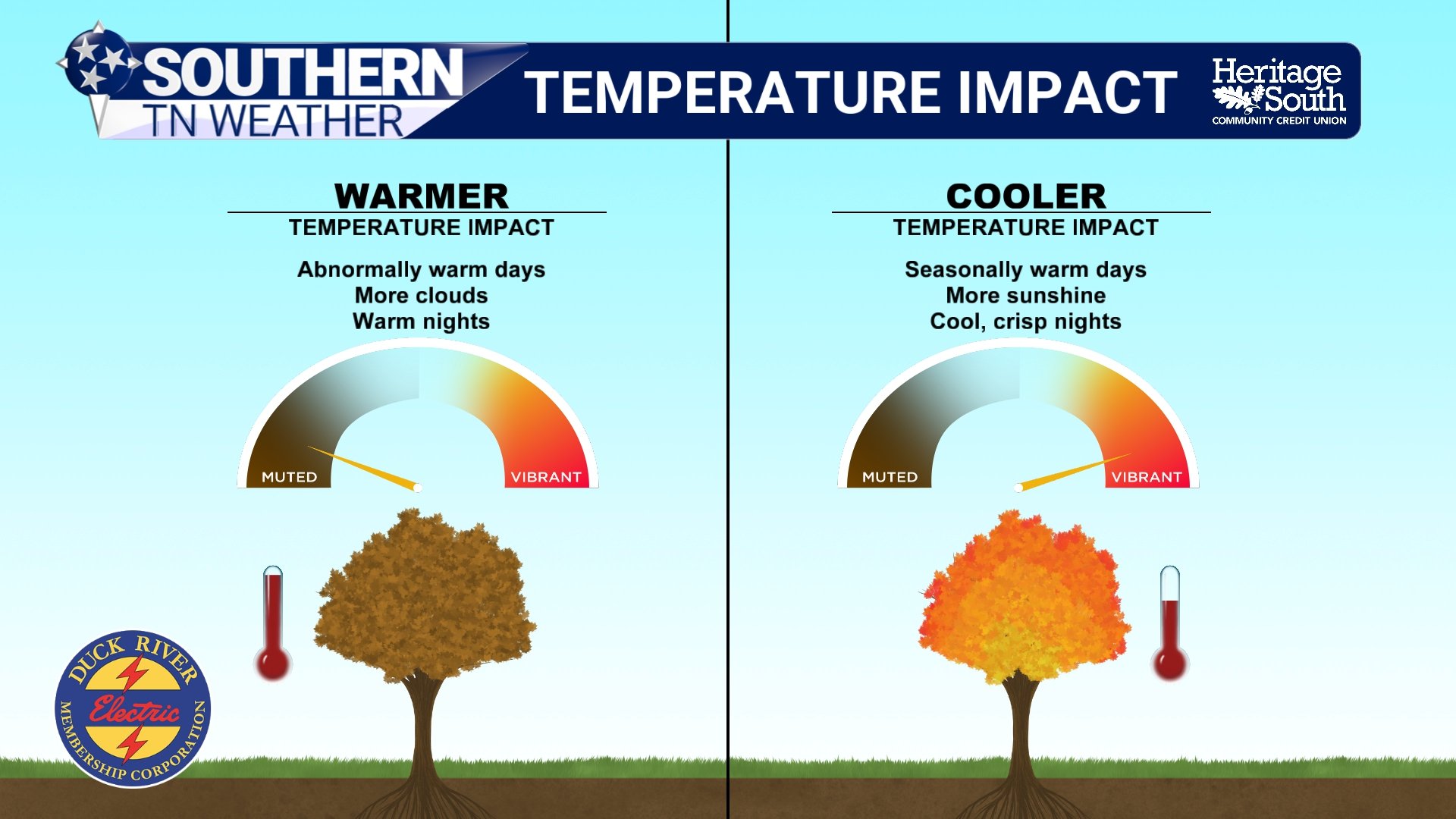
If you're hoping for those really vibrant red and purple leaves, one of the most favorable weather combinations is sunny afternoons followed by cool, but not freezing, nights. And wouldn't you know it? That's almost EXACTLY the kind of weather we're expecting across Southern Middle Tennessee this week! Here's how it works.
During sunny afternoons, leaves can continue producing sugars through photosynthesis while they remain active. As autumn progresses, the movement of sugars out of the leaves begins to slow, allowing some of those sugars to accumulate. When nighttime temperatures become chilly, particularly without dropping low enough to cause significant frost damage, conditions can favor the production of anthocyanins. These are the pigments responsible for many of the brilliant reds and purples we associate with autumn. That's why a stretch of bright, sunny afternoons and crisp fall mornings can sometimes help produce particularly colorful foliage.
However, there's an important distinction here. Not every tree produces large amounts of anthocyanins, and different species respond differently to temperature and sunlight. Some trees are naturally known for their brilliant reds, while others primarily display shades of yellow, orange, or brown regardless of the weather. So, while our forecast this week may be favorable for color development in some trees, it doesn't guarantee that every tree across Southern Middle Tennessee will suddenly turn bright red! Still, this is certainly one of the more encouraging aspects of our upcoming weather pattern.
🌵 Here's the Problem: Our Ongoing Drought
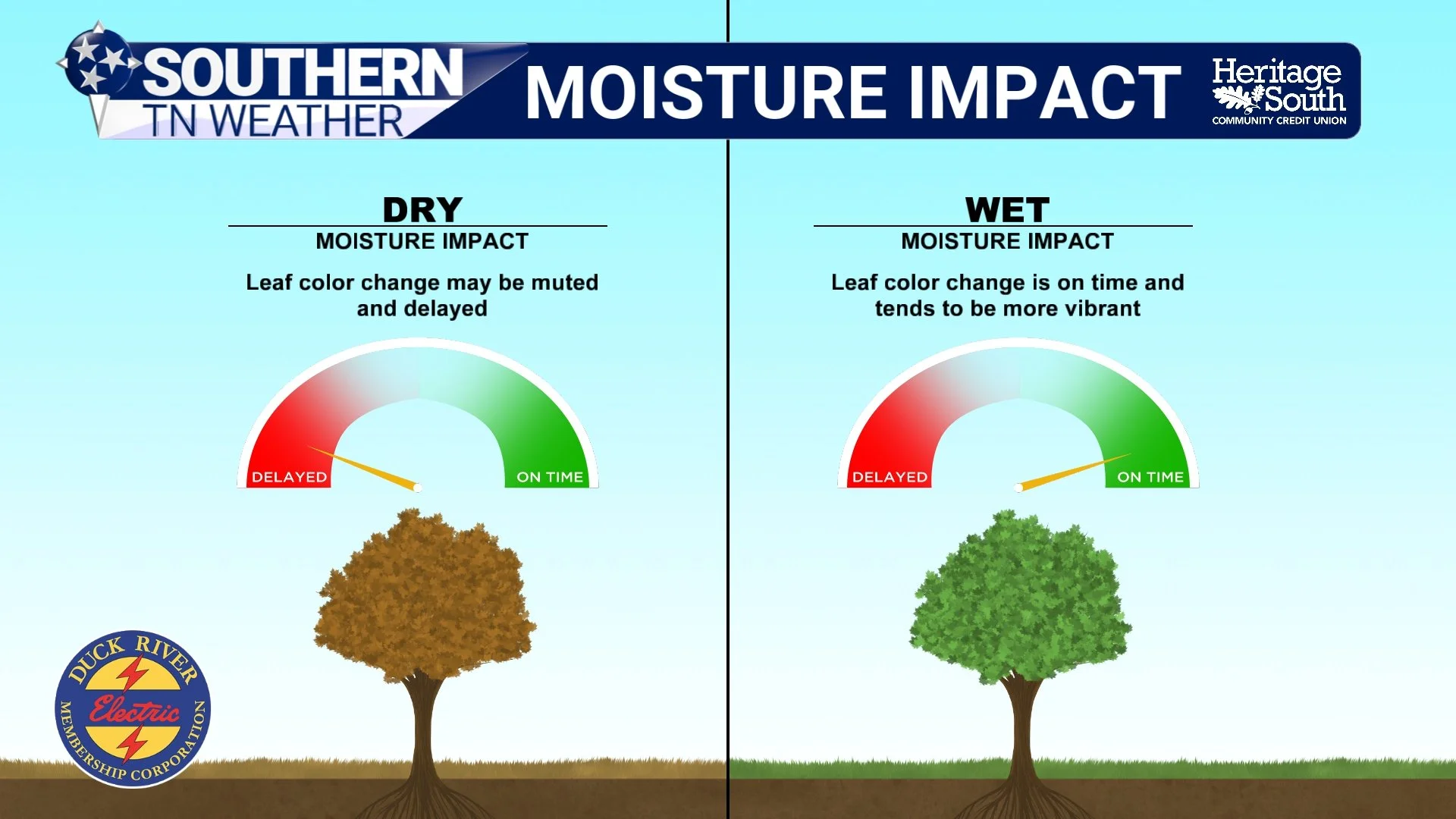
Now, let's talk about the elephant in the room. Or perhaps I should say the THIRSTY elephant in the room… Unfortunately, our ongoing drought could have a noticeable influence on this year's fall foliage across Southern Middle Tennessee. Trees need adequate moisture throughout the growing season to maintain healthy leaves and support normal biological processes. When soil moisture becomes limited for extended periods, trees begin experiencing stress as they struggle to balance water loss through their leaves with the amount of moisture their roots can absorb.
One way trees respond to drought is by reducing water loss, including closing tiny openings on their leaves called stomata. While this helps conserve moisture, it also limits the exchange of carbon dioxide needed for photosynthesis. If drought stress becomes significant enough, leaves may begin to wilt, curl, develop brown edges, or drop prematurely. And THAT is where our fall foliage display could run into trouble.
Instead of gradually transitioning from green to yellow, orange, or red, some drought-stressed trees may simply turn brown and shed their leaves before their full autumn colors have an opportunity to develop. In other cases, the colors may appear duller or the colorful period may be shorter than usual. However, this doesn't necessarily mean we're guaranteed a disappointing fall foliage season. Drought impacts can vary considerably depending on the tree species, soil conditions, local rainfall history, and how deeply established a tree's root system happens to be.
A mature tree growing in deeper, moisture-retaining soil may respond very differently from a younger tree growing on a rocky hillside where soil moisture disappears much more quickly. That's one reason you might notice one tree displaying absolutely BEAUTIFUL fall colors while another tree just a short distance away appears brown and stressed. And here's another important point: A little drought stress doesn't automatically mean poor fall colors. Under some circumstances, moderate stress can influence pigment production. But prolonged or severe drought, especially when combined with excessive heat, is much more likely to cause premature leaf drop and reduce the overall display. With the extent of our ongoing drought, that's certainly something worth watching this year.
🥵 What About All That Record-Breaking October Heat?
If you've been following our forecasts over the past couple of weeks, you already know that October hasn't exactly behaved like October! Just last week, portions of Southern Middle Tennessee experienced afternoon temperatures approaching or exceeding 90 degrees, with several communities challenging or breaking daily high-temperature records. That's a pretty remarkable stretch of warmth for the middle of October, and it may also have implications for our fall foliage.
Warm autumn temperatures can sometimes delay the progression of leaf color changes, particularly when nighttime temperatures remain unusually mild. Remember, shorter daylight is the primary seasonal signal, but temperature influences how quickly many of the physiological processes associated with autumn leaf changes occur. When we experience prolonged warmth, some trees may hold onto their green leaves longer than they otherwise would.
On the other hand, unusually hot and dry conditions can also increase moisture stress, potentially causing leaves to brown or fall prematurely. So, depending on the tree and its growing conditions, excessive autumn warmth can influence foliage in different ways. Now that we've transitioned into a much more seasonable weather pattern, with chilly mornings and comfortable afternoons, conditions may become more favorable for normal fall color development in trees that still have healthy leaves.
But unfortunately, cooler temperatures alone cannot reverse drought-related damage that's already occurred. If a tree has already dropped a significant portion of its leaves because of moisture stress, a few chilly nights aren't going to bring those leaves back!
⛰️ Why the Cumberland Plateau Often Looks Different
Another interesting aspect of fall foliage across Southern Middle Tennessee is just how much the timing and intensity of colors can vary depending on where you live. If you've ever driven from Shelbyville or Columbia toward Monteagle, Sewanee, or other communities along the Cumberland Plateau during autumn, you've probably noticed that the leaves don't always change colors at the same time. There's a good reason for that!
Elevation plays an important role in temperature, and higher-elevation locations are generally cooler than surrounding lower elevations. Because of those cooler conditions, fall colors often begin developing earlier along the Cumberland Plateau before gradually becoming more widespread across lower-elevation communities.
However, elevation isn't the only factor. Differences in tree species, slope orientation, sunlight exposure, soil moisture, and local topography can also influence how quickly foliage changes. North-facing slopes, for example, generally receive less direct sunlight than south-facing slopes and may maintain different temperature and moisture conditions. Sheltered valleys can also experience colder nighttime temperatures because dense, chilly air tends to settle into low-lying areas.
That means the timing and appearance of fall colors can vary considerably, even across relatively short distances. And with our ongoing drought, those differences could become even more noticeable this year. Some wooded areas may maintain enough moisture to produce a beautiful display, while nearby locations with thinner soils or more drought-sensitive vegetation may experience premature browning and leaf drop.
🍂 So, Are We Going to Have Bad Fall Colors This Year?
That's the million-dollar question, isn't it? And the answer is that it's still difficult to predict exactly how vibrant our foliage will be across Southern Middle Tennessee this autumn. We have some competing influences at work.
On one hand, our recent record-breaking warmth and ongoing drought could negatively affect foliage, particularly in areas where trees have experienced significant moisture stress. On the other hand, the cooler mornings, sunny afternoons, and relatively seasonable temperatures we're expecting this week could provide favorable conditions for continued color development in trees that remain healthy.
The outcome will likely vary quite a bit across our coverage area. Some communities may experience beautiful reds, oranges, and yellows, while others may notice more browning, uneven color development, or leaves dropping earlier than usual. The important thing to understand is that a drought doesn't automatically eliminate fall colors, just as a stretch of chilly weather doesn't automatically guarantee a spectacular display.
There are simply too many factors involved to make a definitive prediction based on temperature or rainfall alone. But one thing is certain: Our ongoing drought adds another interesting variable to this year's autumn foliage season, and it'll be worth watching how the colors develop over the next several weeks.
☀️ This Week's Forecast: Beautiful Fall Weather, But Still NO Rain!
Now, let's turn our attention to the actual forecast because, if you enjoy sunshine and comfortable autumn temperatures, you're going to LOVE what we've got coming! A large area of high pressure is dominating the weather pattern across Southern Middle Tennessee, and it's expected to remain our primary weather feature throughout much of the upcoming week. High pressure generally promotes sinking air through the atmosphere, which makes it more difficult for clouds and widespread precipitation to develop. That's why we're expecting so much sunshine and such limited rainfall potential over the next several days.
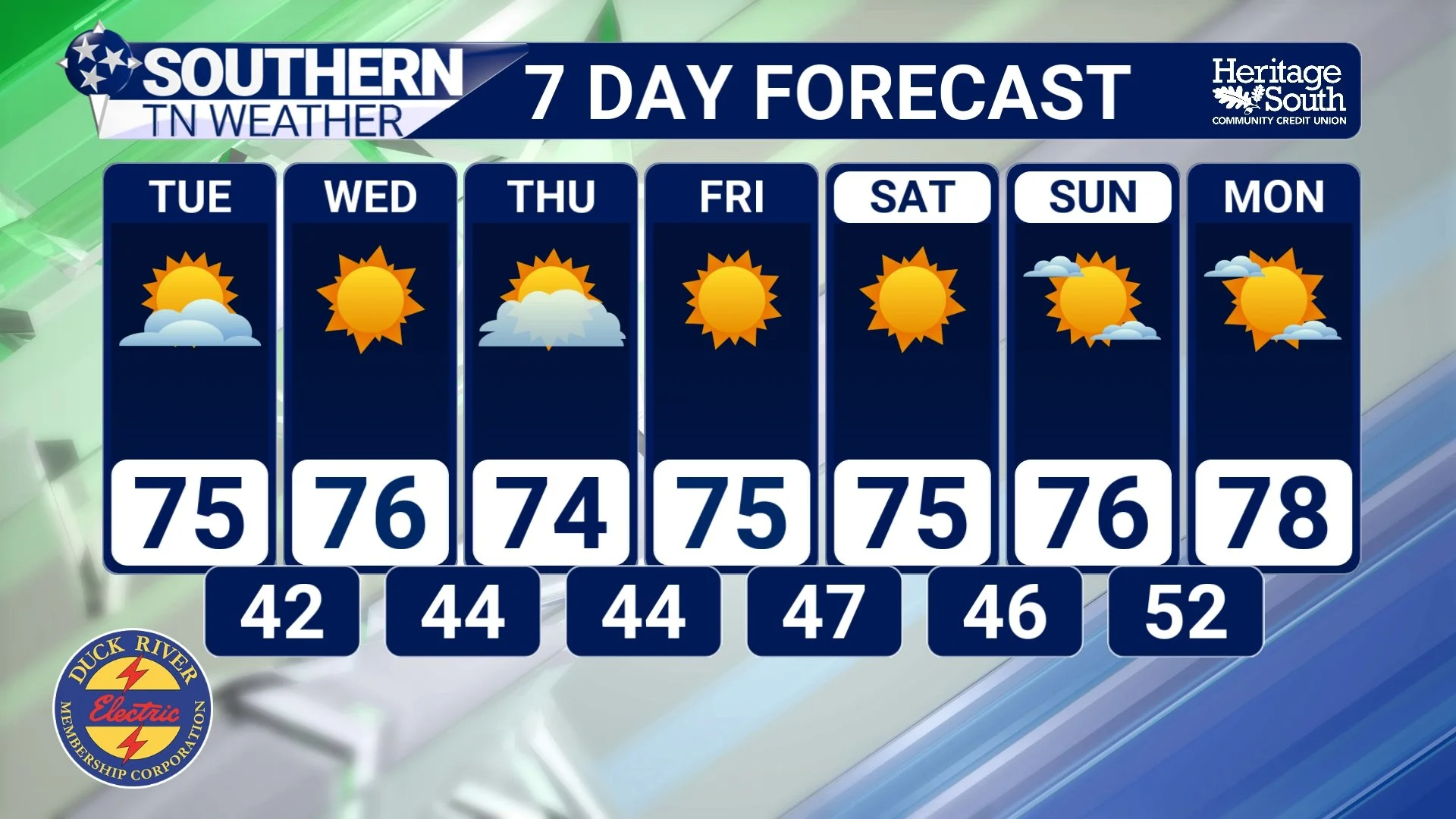
Monday: We're enjoying plenty of sunshine with afternoon highs generally in the lower 70s. Humidity levels are quite low, with relative humidity dropping below 40% in many locations and potentially below 30% in a few areas west of Interstate 65. Tonight will be chilly again, with temperatures falling into the lower and middle 40s. Some patchy fog may develop toward daybreak Tuesday, especially near bodies of water and in sheltered valleys.
Tuesday: Another pleasant autumn day is expected, although a weak disturbance passing through the region may produce some additional cloud cover at times. Otherwise, conditions will remain dry, with afternoon temperatures generally in the lower to middle 70s. Overnight lows will fall back into the 40s.
Wednesday and Thursday: High pressure remains in control, bringing mostly sunny skies and gradually warming temperatures. Afternoon highs should climb into the middle and upper 70s, with some communities approaching 80 degrees by Thursday. Mornings will continue to be chilly, with lows generally in the 40s.
Friday through Sunday: The overall pattern looks largely unchanged, with continued dry weather, plenty of sunshine, and afternoon temperatures generally in the middle to upper 70s. Some locations may flirt with 80 degrees, particularly toward the end of the week or over the weekend.
Unfortunately, there's one rather significant downside to this beautiful forecast. We are NOT expecting meaningful rainfall over the next seven days. There are some indications that a pattern change could become possible sometime early to middle next week, but it's much too early to determine whether that would bring beneficial rainfall to Southern Middle Tennessee.
In the meantime, our drought conditions are expected to continue worsening. That's particularly frustrating considering how pleasant the weather will be for just about everything else. We could really use several rounds of widespread, soaking rainfall, but the atmosphere apparently has other plans!
The Bottom Line 🧾
🍁 Shorter daylight is the primary trigger for trees to begin changing colors, but weather strongly influences how vibrant those colors become and how long they last.
☀️ Sunny afternoons and chilly nights can favor the development of brilliant red and purple pigments in certain tree species.
🌵 Our ongoing drought could negatively affect fall foliage, potentially causing premature browning, duller colors, or early leaf drop in stressed trees.
🥵 Recent record-breaking October heat may have influenced the timing of color changes while also increasing moisture stress.
⛰️ The Cumberland Plateau often experiences earlier fall colors because of its generally cooler temperatures and higher elevations.
🍂 A disappointing foliage season isn't guaranteed! Some trees may still produce beautiful colors, while others could show more obvious drought stress.
🌡️ This week's forecast: Mostly sunny skies, afternoon highs in the 70s, and chilly mornings in the 40s.
🌫️ Patchy morning fog will be possible in sheltered valleys and near bodies of water, especially early Tuesday.
🌵 Drought concerns continue: No meaningful rainfall is expected over the next seven days, and drought conditions may continue worsening.
📰 Reminder: The Southern Tennessee Weather Blog, presented by Heritage South Community Credit Union, is updated Monday through Friday with fresh, locally tailored forecasts you can trust.
